
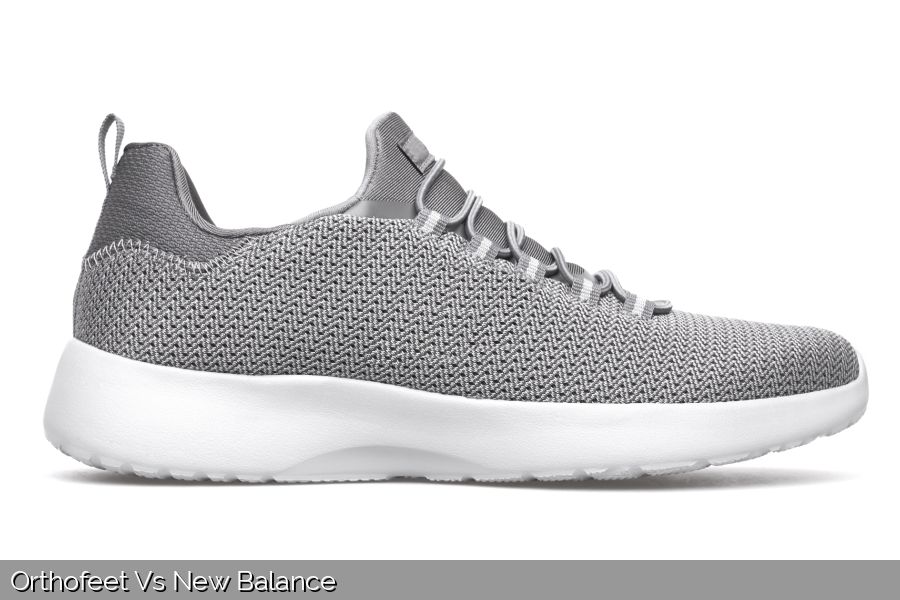
Orthofeet vs New Balance: Which Is Better for Foot Pain, Orthotics, and Daily Walking?
Quick Answer
Choose Orthofeet if you need therapeutic comfort: extra depth, a wide toe box, stretch uppers, soft interiors, built-in orthotic-style insoles, spacers, and easier accommodation for swelling, bunions, hammertoes, arthritis, neuropathy, or custom orthotics.
Choose New Balance if you want a more durable, versatile walking or athletic shoe with excellent width options, stronger motion-control models, and better long-term value for active use. New Balance is especially strong for people who need stability shoes such as the 1540v4 or 928v3, or cushioned daily shoes such as the 1080 and 880.
The practical difference is this: Orthofeet is better for medically complicated feet. New Balance is better if you want support, cushioning, durability, and width choices in a more athletic shoe.
Orthofeet vs New Balance at a Glance
| Category | Better Choice | Why |
|---|---|---|
| Plantar fasciitis | Depends | Orthofeet for therapeutic support; New Balance for active walking and cushioning |
| Flat feet | New Balance | 1540 and 928 offer stronger motion-control design |
| Overpronation | New Balance | ROLLBAR and stability platforms offer stronger control |
| Bunions | Tie | Orthofeet has stretch and depth; New Balance has many widths |
| Hammertoes | Orthofeet | Higher-volume, softer uppers are more forgiving |
| Diabetic neuropathy | Orthofeet, with New Balance 928/1540 as alternatives | Orthofeet is more diabetic-focused; selected New Balance models are strong therapeutic walkers |
| Custom orthotics | Tie | Orthofeet has more depth; New Balance has removable insoles and broad widths |
| Running | New Balance | Orthofeet is not a running brand |
| Durability | New Balance | Stronger outsole and midsole reputation |
| Return policy | Orthofeet for worn trial | Orthofeet offers a 60-day wear test; New Balance returns generally require new condition |
| Style variety | New Balance | Broader athletic and casual lineup |
What Makes Orthofeet Different?
Orthofeet is built around foot accommodation. The brand is designed for people who often cannot wear ordinary athletic shoes comfortably.
Key Orthofeet features include:
- Extra-depth construction for more interior volume.
- Wide and extra-wide fit options.
- Stretch or soft uppers for bunions, hammertoes, and swelling.
- Removable orthotic-style insoles.
- Optional arch boosters and fitting spacers.
- Seam-reduced padded interiors for sensitive feet.
- Rocker-like soles on many models to smooth the heel-to-toe transition.
This makes Orthofeet especially useful for people whose pain is caused not only by impact, but also by pressure, rubbing, tight toe boxes, or lack of room for orthotics.
What Makes New Balance Different?
New Balance has a broader range. It is not only an orthopedic comfort brand; it is also an athletic, walking, running, and lifestyle brand.
Key New Balance strengths include:
- Multiple widths, often more extensive than mainstream competitors.
- Stability models for overpronation and flat feet.
- ROLLBAR technology in models such as the 1540v4 and 928v3.
- Fresh Foam X cushioning in models such as the 1080 and 1540v4.
- Removable insoles in many models.
- Better durability for high-mileage walking and active use.
- A wider range of styles, prices, and availability.
New Balance is often the better choice when you want a supportive shoe that still feels like a real walking or running shoe.
Best Models to Compare
| Need | Orthofeet option | New Balance option |
|---|---|---|
| Severe foot pain with bunions | Orthofeet Coral, Lava, or similar stretch sneaker | New Balance 928 or 1540 in wide widths |
| Flat feet and overpronation | Orthofeet sneaker with arch booster | New Balance 1540v4 or 928v3 |
| Soft cushioning for walking | Orthofeet walking sneaker | New Balance 1080 or 880 |
| Diabetic-friendly fit | Orthofeet diabetic-friendly styles | New Balance 928 or 1540 where properly fitted |
| Custom orthotics | Orthofeet extra-depth shoe | New Balance 928, 1540, or 990 depending on fit |
| Running | Not recommended as first choice | New Balance 860, 880, 1080, or 1540 depending on support needs |
Plantar Fasciitis
Both brands can work for plantar fasciitis, but they help different types of people.
Heel-Dominant Plantar Fasciitis
If your pain is mostly under the heel, New Balance may be the better first try if you want a traditional athletic shoe. A cushioned model such as the New Balance 1080 can reduce impact, while the 928 or 1540 may help if heel pain is tied to rearfoot instability or overpronation.
Orthofeet can still be the better heel-pain choice when the heel pain comes with swelling, neuropathy, arthritis, or a need for extra interior depth. In that situation, pure cushioning is less important than avoiding pressure points and getting a secure, non-irritating fit.
Arch-Dominant Plantar Fasciitis
If the pain is more along the arch, the decision becomes more about support geometry than softness. Orthofeet’s removable orthotic-style insole and optional arch booster give you more built-in adjustability. That helps if you need to tune how much support sits under the arch.
New Balance is stronger when the arch pain is part of a broader motion-control problem. The 928 and 1540 are more structured than most therapeutic comfort shoes and can be better for people whose plantar fascia pain is aggravated by excessive inward rolling.
Plantar Fasciitis Plus Other Foot Problems
Choose Orthofeet if your plantar fasciitis is part of a broader foot problem. If your feet are swollen, sensitive, diabetic, arthritic, or painful around the toes, Orthofeet’s extra-depth build and stretch uppers may matter more than athletic performance.
Choose New Balance if you want a more durable walking or running shoe. New Balance 1080-style cushioning can help people who want soft impact protection, while the 1540 and 928 are better for those who need stability and motion control.
The best plantar fasciitis shoe is not always the softest one. Many people need a combination of arch support, heel stability, cushioning, and a fit that does not squeeze the forefoot.
Flat Feet and Overpronation
New Balance is the stronger choice for flat feet and overpronation. The 1540v4 uses ROLLBAR stability technology to help control rearfoot movement, and the 928v3 is a classic motion-control walking shoe with ROLLBAR and ABZORB cushioning.
Orthofeet can help mild to moderate flat feet because it includes arch support and an optional arch booster. But for strong motion-control needs, New Balance has stronger options.
If your flat feet are paired with severe swelling, bunions, or neuropathy, Orthofeet may still fit better. But if the main issue is overpronation during walking, New Balance usually has the edge.
Bunions, Hammertoes, and Wide Feet
This is closer than many comparisons suggest.
Orthofeet is excellent for bunions and hammertoes because its shoes are built with soft, stretchable, high-volume uppers. That matters when the problem is pressure on bony prominences.
New Balance is excellent for wide feet because the brand offers many widths across many models. New Balance may be better if you want a wide shoe that still feels athletic and structured.
Choose Orthofeet when pressure relief is the priority. Choose New Balance when width choice, stability, durability, and everyday versatility are the priority.
Diabetic Feet and Neuropathy
If you have diabetic neuropathy, reduced sensation, a history of ulcers, or circulation problems, get professional fitting advice. A shoe that feels comfortable for five minutes may still create dangerous pressure after a full day.
Orthofeet is often the better starting point for diabetic foot concerns because its design emphasizes extra depth, seam-reduced interiors, soft linings, and orthotic accommodation.
New Balance is still relevant, especially the 928v3 and 1540v4, which are more structured stability shoes with removable inserts and strong width options. But New Balance’s broader lineup includes many shoes that are not appropriate for high-risk diabetic feet, so model selection matters.
Red Flags for Either Brand
For diabetic feet or neuropathy, do not judge either shoe by comfort alone. Stop using the shoe and get professional advice if you notice redness, hot spots, blisters, rubbing, new calluses, heel slip, toe pressure, skin color changes, or any area that feels warm after wear.
This is especially important when sensation is reduced. A shoe can feel painless because the foot is not registering pressure well, not because the fit is safe.
Orthotics and Inserts
Orthofeet and New Balance are both good orthotic-friendly brands, but in different ways.
Stock Insoles
Orthofeet gives you more interior-adjustment tools out of the box: removable insoles, spacers, and optional arch boosters. Its stock setup is closer to an orthotic-style comfort system, so many people can adjust support before buying separate inserts.
New Balance stock insoles vary more by model. Some are basic, some are more cushioned, and some are paired with a much more structured shoe platform. If you are buying New Balance for foot pain, the model matters more than the brand name.
Custom Orthotics
New Balance gives you width variety and stable platforms. For many custom orthotic users, a New Balance 928, 1540, or 990-style shoe can be an excellent fit. The catch is that not every New Balance model has the same depth or shape.
Orthofeet is often easier when the orthotic is thick, rigid, or paired with swelling. The removable insole and spacer system make it easier to create interior volume without immediately sizing up and destabilizing the heel.
AFOs and Thick Inserts
If you use an AFO, brace, lift, or unusually thick insert, Orthofeet is usually the better starting point. Extra depth and removable spacers are specifically useful when you need more vertical room inside the shoe.
New Balance can work for some braces, especially in wider, deeper walking or stability models, but it is less predictable across the lineup. Do not assume a soft running shoe will accept a brace just because it comes in a wide size.
Durability and Cost-per-Wear
New Balance usually wins durability. Its walking and stability models are built for repeated use, and many people choose New Balance because the outsole, midsole, and upper hold up better over time than softer therapeutic shoes.
Orthofeet can still be worth the price if it solves a fit problem that New Balance cannot solve. But if you do not need extra-depth therapeutic construction, New Balance usually offers better long-term value.
Price and Value
Orthofeet and New Balance can overlap in price, but they do not create value in the same way. New Balance is usually the better value for active users because the shoes are more versatile and often more durable. Orthofeet is the better value when standard athletic shoes keep failing because of fit, pressure, swelling, or orthotic volume.
| Buyer priority | Better value | Why |
|---|---|---|
| Long-term walking durability | New Balance | Stronger outsole and stability-shoe reputation |
| Severe bunions or hammertoes | Orthofeet | Stretch and depth may prevent repeated failed purchases |
| Flat feet / overpronation | New Balance | 928 and 1540 provide stronger motion control |
| Custom orthotics | Depends | Orthofeet for depth; New Balance for stable platform |
| Soft cushioning | New Balance | 1080-style cushioning is more athletic and lighter |
| Diabetic-sensitive feet | Orthofeet | More therapeutic fit emphasis |
| Budget flexibility | New Balance | Broader model range and more frequent retail availability |
Return Policy and Trial Risk
This is a major buying factor.
Orthofeet currently advertises a 60-day wear test for shoes and insoles purchased directly from Orthofeet. That means you can test the shoes in real life before deciding.
New Balance currently accepts returns in new condition within 45 days for eligible purchases. That is useful for sizing, but it is not the same as a worn-shoe trial.
If you are unsure whether therapeutic footwear will work for your pain, Orthofeet’s trial policy reduces risk. If you already know your New Balance size and model, New Balance may be easier to buy confidently.
What Most People Miss
Many shoppers compare Orthofeet and New Balance as if they are two versions of the same shoe. They are not.
Orthofeet is a pressure-relief and accommodation brand. New Balance is a fit-width and stability-performance brand.
That means the right question is not “Which brand is better?” The right question is “What problem is my shoe supposed to solve?”
- If your shoe must stop rubbing your bunion, pick Orthofeet.
- If your shoe must control overpronation, pick New Balance 1540 or 928.
- If your shoe must fit a custom orthotic and swollen foot, try Orthofeet first.
- If your shoe must handle daily walking mileage, New Balance usually wins.
- If you have diabetic neuropathy, fit safety matters more than brand loyalty.
Detailed Model Comparison
| Model | Best for | Why it matters | Main drawback |
|---|---|---|---|
| Orthofeet Coral/Lava-style sneaker | Plantar fasciitis, bunions, neuropathy, swollen feet | Stretch upper, extra depth, removable insole, arch booster, fitting spacers | Less athletic, less durable than the best New Balance models |
| Orthofeet hands-free styles | Older adults, limited mobility, balance concerns | Easier entry with therapeutic comfort features | Roomy fit may not lock narrow heels well |
| New Balance 1540v4 | Flat feet, overpronation, motion control, orthotics | ROLLBAR stability, Fresh Foam X, two removable inserts, APMA acceptance | More expensive and more structured than a soft comfort sneaker |
| New Balance 928v3 | Walking, severe pronation, work shoes, diabetic-friendly fitting | Motion control, ROLLBAR, ABZORB cushioning, leather upper | Heavy, stiff, clinical-looking |
| New Balance 1080 | Cushioning, walking, high arches, neutral comfort | Excellent cushion-to-weight profile and soft ride | Too soft or unstable for some overpronators |
| New Balance 990v6 | Durable daily wear, wide feet, all-day standing | Stable base, premium materials, broad availability | High price; not as soft as max-cushion shoes |
| New Balance 880 | Neutral walking/running with moderate cushion | More balanced than the 1080 | Not enough control for severe flat feet |
Technology Breakdown
Orthofeet Ortho-Cushion System
Orthofeet’s main value is the combination of several fit tools in one shoe. The removable orthotic-style insole gives arch contact and a deep heel cup. The optional arch booster lets the wearer increase arch support without buying another insert. The removable spacers let the wearer change shoe volume, which helps when fitting swelling, thicker socks, or custom orthotics.
That system is especially useful for people who have tried standard athletic shoes and found that the upper, toe box, or insole created pressure. Orthofeet is not only trying to cushion the foot; it is trying to reduce friction, pressure, and poor fit.
New Balance ROLLBAR
New Balance ROLLBAR is the key feature in motion-control models such as the 928 and 1540. It is designed to limit rearfoot movement and create a more stable walking platform. This matters most for people with flat feet, overpronation, posterior tibial tendon strain, or a history of shoes collapsing inward.
The tradeoff is stiffness. A shoe that controls rearfoot movement can feel heavy or restrictive to someone who does not need that level of support.
Fresh Foam X, ABZORB, ENCAP, and FuelCell
New Balance uses different cushioning systems across different shoes. Fresh Foam X is the softer, more cushioned material seen in models like the 1080 and 1540v4. ABZORB appears in walking models such as the 928 and is meant to reduce impact. ENCAP, used in shoes like the 990 line, combines a softer core with a firmer rim for stability and durability. FuelCell is more performance-oriented and helps the 990v6 feel less dead underfoot.
For the reader, the takeaway is simple: do not buy “New Balance” generically. Buy the New Balance model that matches the problem. A soft 1080 and a motion-control 928 are very different shoes.
Condition-by-Condition Recommendations
Plantar Fasciitis
If the reader has plantar fasciitis with no major fit complication, New Balance usually gives more options. The 1080 can work for people who want soft impact protection; the 1540 or 928 can work for people whose plantar fasciitis is linked to flat feet or overpronation.
Orthofeet becomes more compelling when the plantar fasciitis comes with bunions, hammertoes, arthritis, neuropathy, or swelling. In that case, the shoe’s upper and interior shape may matter more than the midsole.
Flat Feet and Overpronation
New Balance wins this category. The 1540v4 and 928v3 are more serious stability shoes than typical Orthofeet sneakers. If the foot collapses inward, if the shoe midsole wears down on the inside edge, or if the reader has knee pain tied to overpronation, New Balance should be tested first.
Orthofeet can help when the user needs arch support plus extra depth, but it is not the stronger motion-control platform.
Bunions, Hammertoes, and Forefoot Pressure
Orthofeet is the safer first try when the forefoot is the main pain area. A shoe can be technically wide and still rub a bunion if the upper is stiff or the toe box is low. Orthofeet’s stretch uppers and higher-volume toe box give it an advantage.
New Balance is still excellent for people who mainly need width. If the user has a wide forefoot but not severe toe deformity, a New Balance wide or extra-wide model may feel more stable and more durable.
Diabetic Neuropathy
This is a high-risk category. The article should not imply that any consumer shoe is automatically safe for diabetic neuropathy. The priorities are protective fit, reduced pressure, minimal internal friction, correct socks, and professional fitting.
Orthofeet is often the better starting point because its designs are more explicitly therapeutic. New Balance 928 and 1540 can also be appropriate when properly fitted, but the rest of the New Balance lineup should not be treated as diabetic footwear by default.
Arthritis and Joint Pain
Orthofeet can be better when arthritis causes swelling, forefoot pain, or difficulty tolerating stiff uppers. The mild rocker and soft interior can reduce irritation.
New Balance can be better when the reader wants a more durable platform for daily walking. The 1080 is softer; the 990 is more stable and durable; the 928 is more controlling but heavier.
Standing All Day
New Balance usually wins if the reader stands and walks actively for work and does not have a complex foot shape. The 990, 1080, 928, and 1540 each solve a different standing problem.
Orthofeet wins if the standing problem is tied to swelling, diabetic sensitivity, toe pressure, or custom orthotics.
Evidence Quality and Marketing Claims
The strongest evidence in this category is not usually brand-specific. It is feature-specific.
Rocker soles: Research on therapeutic footwear suggests rocker soles can reduce pressure in parts of the forefoot and may help specific diabetic-footwear scenarios. This supports why Orthofeet’s rocker-like geometry can be useful, but it does not mean every rocker shoe is ideal for every foot.
Motion-control shoes: New Balance motion-control shoes mechanically make sense for some flat-footed walkers, but the broader idea that everyone should be matched to a shoe by foot type has mixed evidence. The better rule is to test whether the shoe reduces symptoms and improves comfort without creating new pressure points.
APMA Seal: Orthofeet and selected New Balance models have APMA acceptance. That is a useful credibility signal, but not a guarantee of pain relief. It means the product was reviewed as promoting foot health; it is not a head-to-head clinical ranking.
Orthofeet clinical trial: Orthofeet has a small registered crossover trial in older adults with foot pain, which is more brand-specific evidence than many comfort brands provide. The limitation is that the study population and comparator do not prove Orthofeet is superior to a correctly fitted New Balance shoe.
Sizing and Fit Strategy
For Orthofeet, start by thinking about volume. If the shoe feels loose, remove fewer spacers or use the included fit system before changing size. If you are using custom orthotics, test the shoe with the custom orthotic from the start. If the heel slips badly, do not keep the shoe just because the forefoot feels comfortable.
For New Balance, start by choosing the right model before choosing the width. A wide 1080 is not the same solution as a wide 1540. If you need motion control, choose a motion-control model. If you need cushioning, choose a cushioned neutral model. If you need a durable walking shoe, choose a walking or stability model.
Who Should Avoid Each Brand?
Avoid Orthofeet as the first choice if you want running performance, a sleek athletic feel, or maximum durability per mile. Orthofeet can be comfortable, but it is not the strongest athletic brand.
Avoid New Balance as a generic recommendation if the user has diabetic neuropathy, severe hammertoes, or major swelling. Some New Balance models can work, but the wrong New Balance model can still create pressure and rubbing.
Buying Checklist
- If you need pressure relief over bunions or hammertoes, start with Orthofeet.
- If your shoes collapse inward, start with New Balance 1540 or 928.
- If you need soft cushioning without severe pronation control, try New Balance 1080.
- If you stand all day and need durability, compare New Balance 990, 928, and 1540.
- If your foot swells through the day, prioritize adjustable volume and stretch uppers.
- If you use custom orthotics, remove the stock insole and test the shoe with your real insert.
- If you have diabetes, do not rely on online fit advice alone.
- If the shoe creates new numbness, rubbing, or hot spots, return it.
Verdict
Choose Orthofeet if you have complex foot pain, sensitive feet, bunions, hammertoes, arthritis, neuropathy, swelling, or a need for extra-depth shoes.
Choose New Balance if you need supportive walking shoes, better durability, athletic performance, strong motion control, or a broad range of widths.
New Balance is the better all-around brand for active walking, running, stability, and long-term durability. Orthofeet may be the better first try for medically complicated feet.
Frequently Asked Questions
Is Orthofeet or New Balance better for plantar fasciitis?
Orthofeet is better when plantar fasciitis comes with bunions, swelling, arthritis, or neuropathy. New Balance is better for active walking, running, durability, and stability.
Which brand is better for flat feet?
New Balance is usually better for flat feet because models such as the 1540v4 and 928v3 offer stronger motion-control features.
Which brand is better for bunions?
Orthofeet is better for severe bunions and hammertoes because of its stretch uppers and extra-depth toe boxes. New Balance is still excellent for wide feet because it offers many widths.
Can I use custom orthotics in Orthofeet or New Balance?
Yes, many models from both brands have removable insoles. Orthofeet usually has more interior volume; New Balance usually has better stability and width choice.
Is New Balance more durable than Orthofeet?
Usually, yes. New Balance tends to be the better long-term walking and athletic shoe. Orthofeet’s value is in accommodation and pain relief, not maximum athletic durability.
Which brand is better for diabetic feet?
Orthofeet is often the safer starting point for diabetic-friendly comfort, but selected New Balance models such as the 928 and 1540 can also work when professionally fitted.